







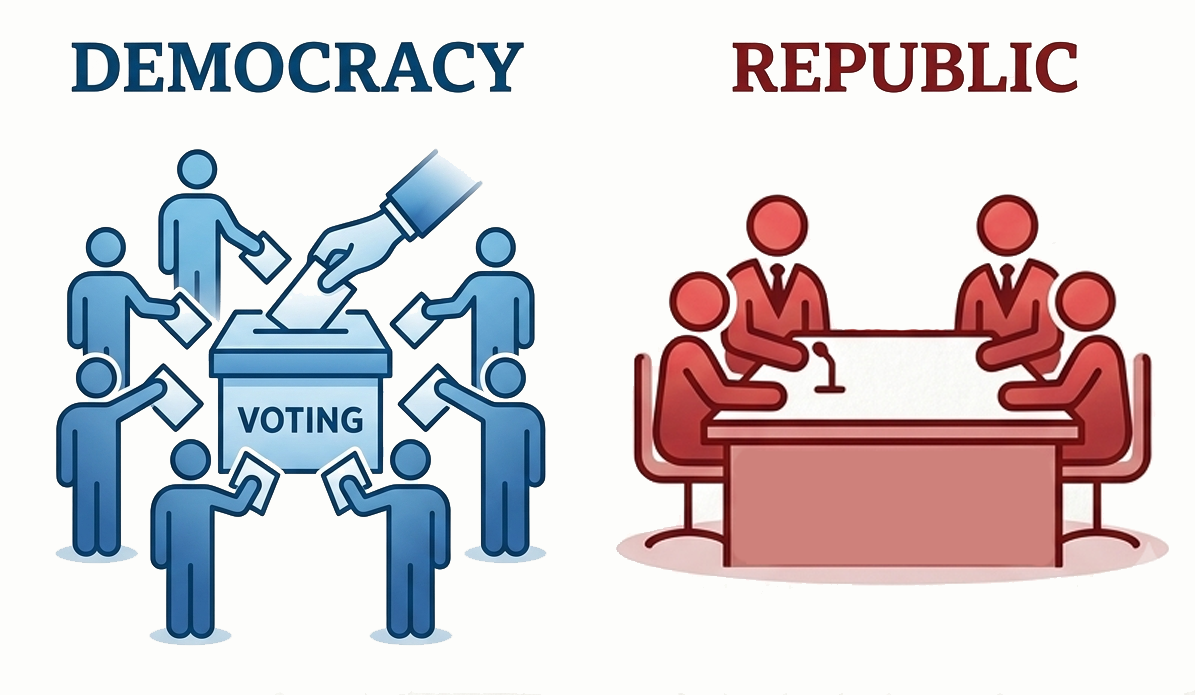
"We have a republic, not a democracy" is one of the most repeated lines in American political debate — and one of the most misunderstood. The two words get treated as synonyms, or as opposites, when they are really describing two different answers to the same question: who makes the rules? Get that question wrong, and the Electoral College looks like a betrayal of democracy rather than what it actually is — a deliberate, structural choice the framers made to protect the public good from the dangers of direct rule.
Rule by the People, Directly
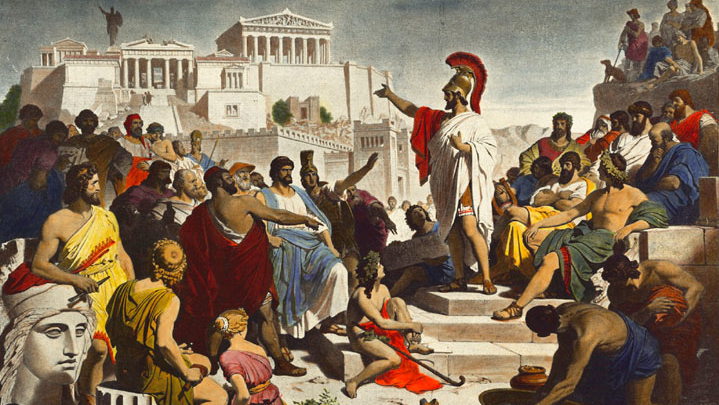
Democracy comes from the Greek dēmos ("the people") and -kratiā ("rule") — literally, rule by the people. In its purest form, the people don't elect anyone to decide for them; they vote on the rules themselves. Athens ran its assembly this way, with citizens gathering to debate and vote on the issues of the day in person.
That model has an obvious appeal: nothing stands between the people and the decision. It also has an obvious flaw. Direct democracy assumes every voter has the time, information, and detachment to weigh every issue carefully, every time. It rarely works that way. Majorities can be swept up by a moment of fear or anger, and a vote taken on the spot leaves no room for deliberation, no check against a crowd that has lost its head.
Rule by the People, Once Removed
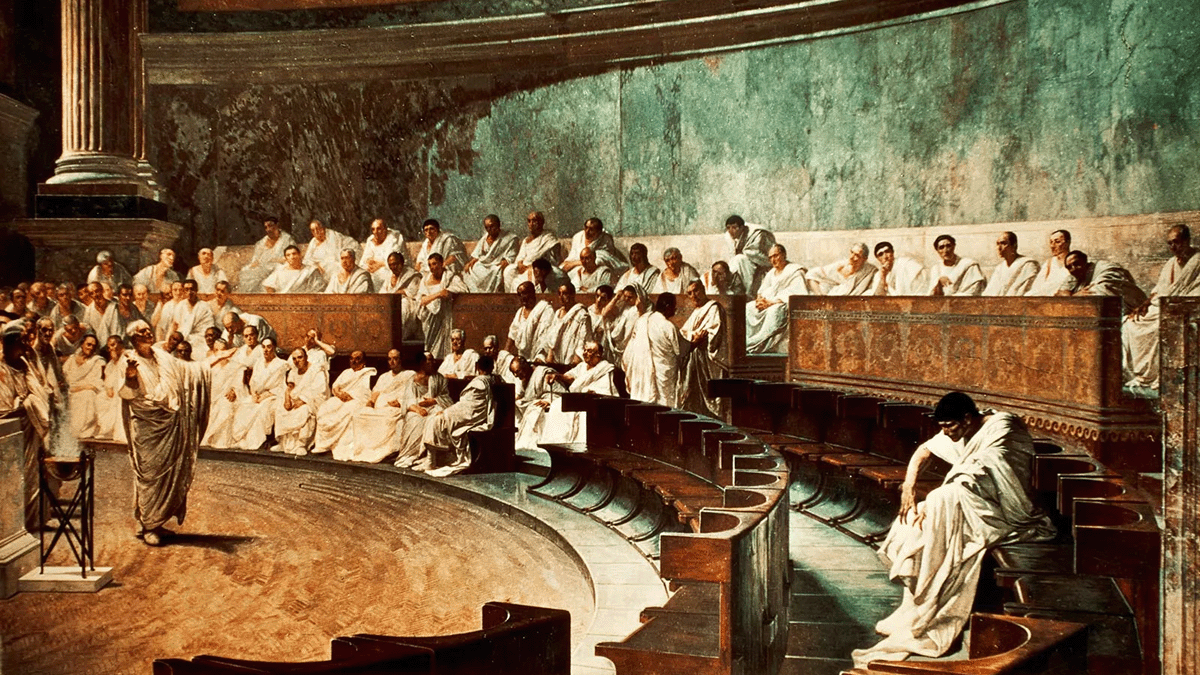
Republic comes from the Latin rēs pūblica — "the public thing," or the affairs of the public. A republic doesn't ask the people to decide every question themselves. Instead, the people choose a smaller body of representatives, and that body does the deliberating. Rome built its republic on this principle, and the American framers borrowed it deliberately.
The republican model trades immediacy for deliberation. A smaller body of representatives can study an issue, hear arguments, and negotiate — the kind of sustained reasoning a mass vote can't accommodate. The framers weren't interested in direct democracy's purity; they were interested in good government, and they believed deliberation by the few produced better outcomes than a snap decision by the many.
Why the Electoral College Is a Republican Institution
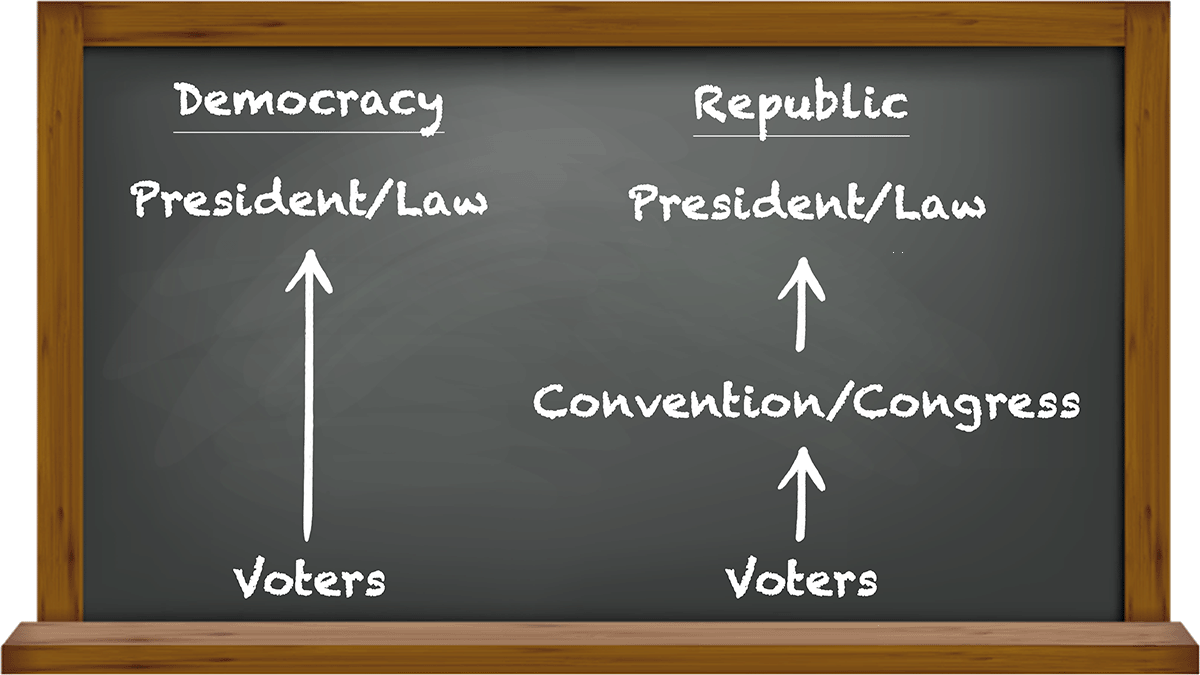
This is the distinction the Electoral College was built on. A pure democracy would let the people vote directly for president and tally the result nationally. A republic interposes a smaller body — the electors — between the people and the outcome, trusting that body to exercise judgment a national headcount cannot.
That is not a flaw in the system; it is the system working as designed. The framers feared the instability of direct national votes for the same reason they feared mob rule in Athens: concentrated, unmediated power invites manipulation, and a single national contest puts the whole country's leadership up for grabs in one undeliberated moment. Electors, chosen locally and accountable to their own communities, were meant to be the deliberative buffer a republic is supposed to provide.
The choice between democracy and republic is ultimately a choice about where deliberation happens — in the moment, by everyone at once, or in stages, by representatives chosen to do the work. The framers chose the latter, and the Electoral College is what that choice looks like in practice.